
"small farm"
10000 article(s) found
The types of coffee farms in Kenya introduce the benefits of drinking Kenyan coffee
Following Cafe (official Wechat account vdailycom) found that Kenya Cafe opened a small shop of its own. There are two types of coffee farms in Kenya. One is a large plantation covering an area of more than five acres, but the average elevation is low. In the case of Kenyan Coffee, the coffee beans of the big farm are of medium quality. The best Kenya beans come from small farms, most of which are located in five or six thousand feet.

Tanzania Coffee with excellent Grinding degree, Taste characteristics, Price introduction to High-quality Coffee
The coffee beans produced here are all exported from Kilimanjaro, but in addition to Mount Kilimanjaro, there are several major coffee producing areas throughout Tanzania, there are more small farms in other areas, and most small farms also have a planting area of several hundred mu. Some have their own washing equipment and bean drying farms, but the grading treatment still has to go through large-scale treatment.

Colombia Nario Na Linglong small Farmer's selected Farm Coffee beans
Colombia Nario Na Linglong small Farmer selection Farm Coffee beans Colombia is currently the third largest coffee producer in the world, after Brazil and Vietnam. It was first planted in the 1830s and accounted for the largest number of export crops in the 20th century. The unique topography of the mountains, coupled with a variety of micro-climate, provides an ideal planting environment. About 75% of the total output is sold abroad, making it the largest.

G3 Flavor characteristics of the Red Cherry Project Dark Wizard Nefas farm Farm
Name: dark wizard Nefas farm Mufas farm producing area: Addis Ababa Addis Ababa country: Ethiopia grade: G3 altitude: 1600-1700m above harvest time: soil properties from September to January of each year: PH5.2~6.2 red brown laterite varieties: heirloom cultivars traditional Yega native species treatment method: sunburn appearance

Introduction to Tanzania Coffee, which is mainly based on coffee as one of the coffee-producing countries.
The coffee beans produced here are all exported from Kilimanjaro, but in addition to Mount Kilimanjaro, there are several major coffee producing areas throughout Tanzania, there are more small farms in other areas, and most small farms also have a planting area of several hundred mu. Some have their own washing equipment and bean drying farms, but the grading treatment still has to go through large-scale treatment.
What is organic coffee? Is the price of organic coffee high? Will organic coffee be healthier?
What makes coffee organic? Did you know that about 3/4 of all Fairtrade coffee is produced and produced organically? The main reason is that small family farmers are more likely to use organic farming techniques, while small family farmers are farmers served by fair trade practices. Organic farms do not allow the use of synthetic chemicals, fertilizers or pesticides in farming or production. If you mark the coffee

Flavor characteristics of Rwandan Coffee in Red Bourbon-Buf Caf é small Farm
Professional coffee knowledge exchange more coffee bean information please follow the coffee workshop (Wechat official account cafe_style) Rwanda is located in the heart of the interior of Africa, its mountain terrain is fertile land, as well as ancient traditional bourbon species, indicating that the natural environment needed to grow quality coffee beans can be found everywhere in Rwanda. Coffee was introduced to Rwanda by German missionaries in 1904, 1930.

Introduction of Organic Coffee beans on Illimani Imani Mountain Cando Family Farm in Bolivia
Professional barista exchanges please follow the coffee workshop (Wechat official account cafe_style) Bolivia Illimani Imani Cando family farm organic beans Bolivia is a landlocked country known as the ancient plateau, coffee is mainly produced in the plateau 1200 ~ 2000 meters above sea level, the main producing areas are Caranavi Karanawi in the north and Santa Cruz Santa Cruz in the south

Colombia Huilan lucky farm La Fortuna introduction to Colombia coffee how to drink
Professional coffee knowledge exchange More coffee bean information Please pay attention to coffee workshop (Weixin Official Accounts cafe_style) Colombia coffee basic knowledge and flavor description Manor owner Hernando Chantre has been a coffee farmer all his life, but never thought of producing outstanding coffee in the past. On the one hand, the farm is too small, but only less than three hectares, and the fine coffee market seems to be too small.

Luanda Red Bourbon Buf Café Small Farm Coffee Bean Introduction
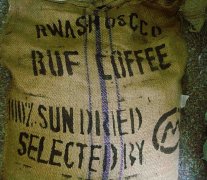
Pay close attention to coffee comments (Weixin Official Accounts vdailycom ) and find that a beautiful coffee shop opens its own shop in Luanda, located in the heart of inland Africa. Its mountainous terrain, fertile land and ancient traditional bourbon species show that the natural environment needed to grow high-quality coffee beans can be found everywhere in Luanda. Coffee was introduced into Luanda by German missionaries in 1904. Since 1930,
Rwanda Coffee drinking French Coffee Manor-Buf Caf é small Farm Coffee cultivation
Professional barista exchanges please pay attention to the coffee workshop (Wechat official account cafe_style) Rwanda is located in the heart of the interior of Africa, its mountain terrain is fertile land, as well as the ancient traditional bourbon species, indicating that the natural environment needed to grow quality coffee beans can be found everywhere in Rwanda. Coffee was introduced to Rwanda by German missionaries in 1904 and was introduced in 1930 because of coffee.

Brief introduction of Colombian Coffee beans Coffee varieties of Colombian Lily Family Farm
For more information on coffee beans, please follow the Coffee Workshop (official Wechat account cafe_style) Colombia is the third largest coffee producer in the world. Coffee is grown everywhere, but in recent years, the south surpasses the north, and the famous Nalinglong, Tolima and Ulla are all good producers. The land of small farmers is no more than 1015 hectares, and the coffee will be on the viaduct when it is dry.

Duran Farm in Western Panama
Duran the Duran family have run farms in the highlands of western Panama for 90 years. They take care of the land and feed the villagers carefully. The coffee beans here are washed with water and have strict bean-picking equipment. The owners of the manor are usually proud of their own brand and grow coffee carefully for fear of ruining the credibility established over the years.

Flavor characteristics of coffee beans in Kaiyong Mountain, a small town in Shaqisuo, Guji, Ethiopia.
For the exchange of professional baristas, please follow the coffee workshop (Wechat official account cafe_style) Kaiyong Mountain Coffee Farm is located in the town of Tarro in Shakiso County, Shakiso County, Guji Zone District, Southern Ethiopia. The farm is located on Kaiyong Mountain with an altitude of about 1900-2050 meters and a total area of 200 hectares.

Where does Kona Coffee come from Hawaii? what are the best estates that produce Hawaiian Kona Coffee?
Professional coffee knowledge exchange more coffee bean information Please follow the coffee workshop (Wechat official account cafe_style) according to the latest selection activity released by the authoritative US media USA Today, the famous Hawaiian Kona Coffee Farm Greenwell Kona Coffee Farms on the big island of Hawaii beat the food factory trip of many international well-known food brands, and was selected as
Introduction to Kena Farm Coffee in Ethiopia what are the characteristics of Kena Farm Coffee
Professional coffee knowledge exchange more coffee bean information please follow the coffee workshop (Wechat official account cafe_style) Kena farm Daniel Tadis (Daniel Tadesse) is one of the pioneers of small coffee farmers to maintain the reputation of Guji (Ethiopia). He was born into a traditional Guji coffee family, deeply rooted in Dari Kidame; 's discovery in Hamballa Waamana woreda.

When is the first peak period for the development of coffee planting industry in China?
By the end of the 1940s, according to recorded figures, there were 2173.33 hectares of rubber plantations on Hainan Island, with a total of 867600 rubber trees, with an annual output of 199,000 tons of dry rubber, more than 300,000 coffee plants and an annual output of 1 ton of coffee beans. According to a survey in the early 1950s, a large number of coffee was left in Fushan area of Chengmai County, with a total of 70,000 plants, including more than 40,000 plants in Daji Village and Fushan Farm (Hongguang Farm) 1

Coffee Gentleman A brief introduction to the characteristics of Taste and aroma of Tanzania Coffee
Many of the farm owners' families have lived here for generations of immigrants, including Indians, Scandinavians, British, and, of course, locals, but most of them are small farms. however, the managers of farms and processing farms are mostly local people. Labor in Tanzania is cheap, so in taking care of the farm pruning and maintenance of coffee plantations, many rely on manual processing, not on

Tanzanian coffee variety Kilimanjaro coffee
The coffee beans produced here are all exported from Kilimanjaro, but in addition to Mount Kilimanjaro, there are several major coffee producing areas throughout Tanzania, there are more small farms in other areas, and most small farms also have a planting area of several hundred mu. Some have their own washing equipment and bean drying farms, but the grading treatment still has to go through large-scale treatment.

African Kenyan coffee producers introduce boutique coffee
There are two types of coffee farms in Kenya. one is a large planting farm that covers an area of more than five acres, but the average elevation is low. In the case of Kenyan coffee, the coffee beans of the large farms are of medium quality. The best Kenya beans are produced in small farms, most of which are located in the foothills or volcanic slopes above 5,000 to 6,000 feet. Each small farmer has a capacity of only 20 to 70 bags per season and is unable to invest.